

A look at the island’s waste crisis, the open-burning fallback, the health toll, and what the government has – and hasn’t – done
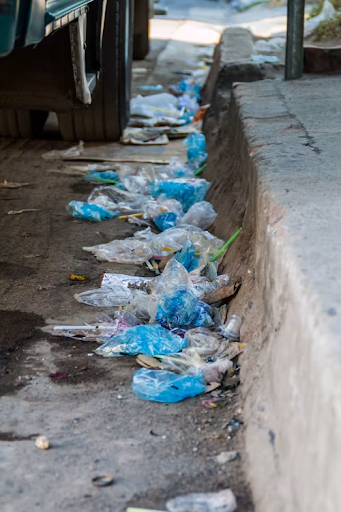
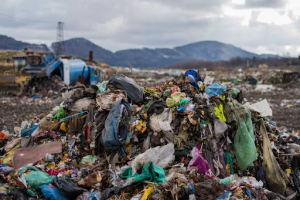
Drive through parts of Bali on any given evening, and you’ll likely see it: a small fire in a yard, by a rice field, or beside a warung, sending up a column of black, acrid smoke. It’s not a bonfire. It’s someone’s household trash – plastic bags, snack wrappers, sachets, styrofoam – being burned because there’s genuinely nowhere else for it to go.
This isn’t a fringe habit. It’s a coping mechanism for an infrastructure failure that has been building for decades, and it’s now colliding with a public health problem most people living through it don’t fully understand.
The scale of the problem
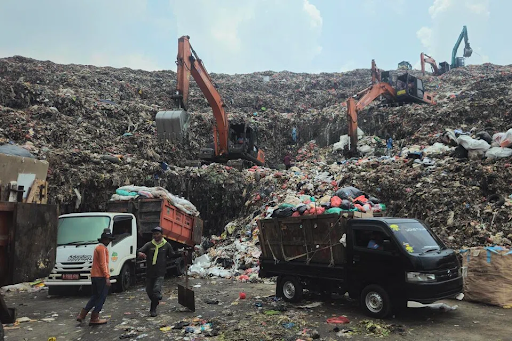
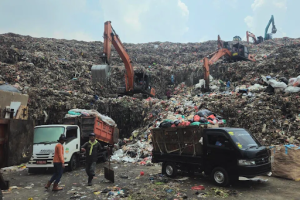
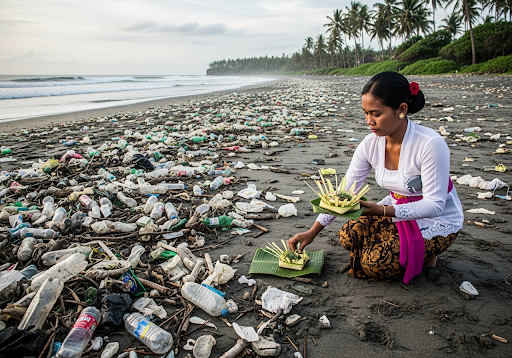
Bali generates roughly 3,436 tons of waste every day, and Indonesia’s own Environment and Forestry Ministry estimates that around 40% of that is still burned or illegally dumped. The island’s main landfill, Suwung, has operated for over 40 years and is at full capacity. Other regency-level TPAs (final disposal sites) across the island are in similarly dire shape. Some estimates put the share of Bali’s garbage that goes entirely unmanaged – no collection, no treatment, nothing – at over half of everything the island produces.
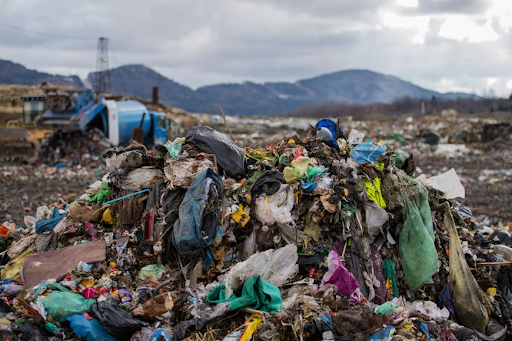
When people don’t get municipal pickup, or when the truck that used to come stops coming, the trash piles up outside the house. Burning it feels like the only practical option. It’s fast, it’s free, and it makes the pile disappear – at least visibly.
The tofu story – and where it actually comes from
There’s a well-documented, deeply unsettling version of this problem that circulates in expat and environmental circles: villages where imported plastic scrap is burned as cheap industrial fuel to heat tofu-production boilers, and where the resulting ash and smoke have poisoned the local food chain so badly that free-range chicken eggs tested with dioxin levels among the worst ever recorded in Asia.
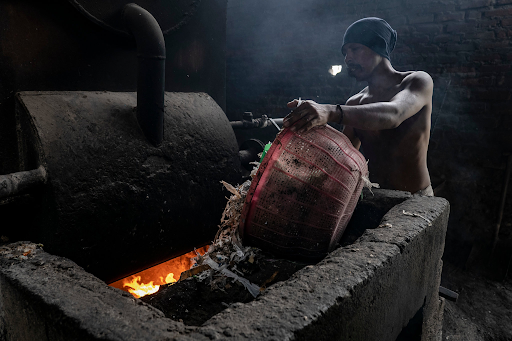
That story is real – but it’s important to be precise about where it happened, because the details matter for anyone trying to understand the actual risk in Bali. The documented cases are in Tropodo and Bangun, in East Java, not Bali itself. Researchers from Ecoton, IPEN, Arnika and the Nexus3 Foundation tested eggs near roughly 60 tofu factories in Tropodo that burn imported plastic waste – including scrap from Australia, France, the US and elsewhere – despite Indonesia’s national ban on open burning. One egg sample near a tofu factory contained dioxin levels that would exceed the EU’s tolerable daily intake by 70 times if eaten regularly, and researchers described it as the second-highest dioxin level ever measured in an egg in Asia. The eggs also carried flame retardant chemicals and PCBs known to disrupt hormones and harm neurological development. Locals in these villages generally didn’t know their food was contaminated until outside researchers told them.
So no – there isn’t currently a peer-reviewed study showing Bali’s chickens are laying dioxin-contaminated eggs from tofu-factory plastic burning specifically. Bali doesn’t have that particular industrial fuel practice at scale. But the underlying mechanism – plastic burned in the open, releasing dioxins and heavy metals into soil and ash, absorbed by free-ranging chickens that peck through that ash, then concentrated in their eggs – is a general chemical reality, not something unique to one village in Java. Bali’s open burning is smaller-scale and more diffuse (household piles rather than factory furnaces). Still, it’s happening constantly, across the island, and nobody has systematically tested Balinese soil, ash or eggs the way Ecoton tested Java’s. The absence of a study is not the same as the absence of a risk – it’s simply a research gap.
What people are breathing
What is well established, including by the World Health Organization, is that open burning of household waste causes skin irritation, difficulty breathing, coughing, headaches and respiratory infections. Reporting from across Bali this year describes residents and long-term expats who say the smoke has gotten so constant in some neighborhoods that they’ve changed how they live – staying indoors during the day, avoiding outdoor exercise, keeping windows shut. One resident quoted in recent coverage said she now rarely leaves her house because of the smoke in her neighborhood, after previously spending most of her time outside.
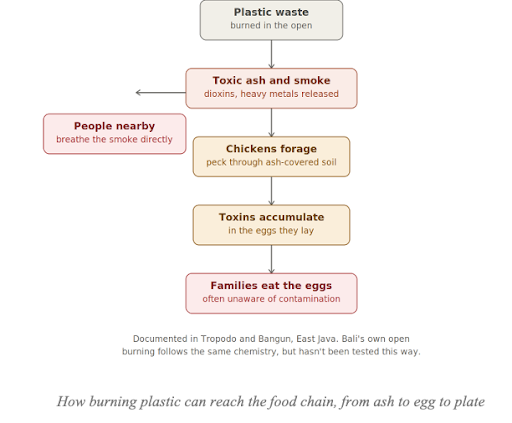
Crucially, many people burning their trash – and many of their neighbors breathing the smoke – aren’t connecting today’s cough or their child’s recurring chest infection to the fire down the road. They treat it as bad luck, “the dust,” or seasonal. The link between backyard plastic burning and chronic low-grade toxic exposure isn’t intuitive, and Bali has had very little public health messaging that specifically names it.
What triggered the current crisis
This isn’t a slow, steady decline – it accelerated sharply and recently, and the government’s own actions are part of why. In April 2025, under pressure to finally shut down open dumping, the Ministry of Environment and Forestry ordered an end to open dumping at Suwung, Bali’s largest landfill. On April 1, the site stopped accepting organic waste, which makes up 65% of everything Bali produces. The landfill’s full closure has since been pushed back repeatedly – from December 2025 to February, then April, and now August 2026 – because the replacement processing infrastructure still isn’t ready.
The result, as one recent analysis of the policy put it, is that the governor compelled citizens to manage waste at the source without giving them the tools or infrastructure to actually do it – compared by one commentator to a doctor ordering a lifestyle change without a prescription or support system. A local nonprofit worker described it more plainly: “When the government tightened restrictions on the Suwung landfill, they failed to provide a viable alternative system. Local communities were suddenly left scrambling – they didn’t know what to do.” Predictably, residents have turned to open burning as the fallback.
What the government has actually done – and hasn’t
It would be inaccurate to say nothing has happened. Bali has, on paper, some of Indonesia’s most ambitious plastic policy:
- 2018: Governor Regulation 97/2018 banned single-use plastic bags, styrofoam and straws, targeting a 70% cut in marine plastic waste within a year; business pushback reached the courts, and Indonesia’s Supreme Court upheld it.
- 2013 (national): Central government mandated all provincial landfills phase out open dumping within five years – thirteen years later, Suwung is still operating and still overwhelmed.
- April 2025: Governor Circular 9/2025, the “Bali Clean Waste Movement,” restricted single-use plastics across government offices, businesses, hotels, schools, markets and places of worship, with full enforcement reportedly reached by January 2026 and a stated goal of a waste-free Bali by 2027.
- 2025–2026: Presidential Regulation 109/2025 accelerated waste-to-energy incinerator projects, with President Prabowo’s state investment vehicle Danantara backing faster development – though this sits in direct tension with existing Bali regulation defining community waste facilities as recycling centres, not incinerators.
Yet enforcement consistently breaks down. Experts describe overtourism, weak enforcement and insufficient public education as the structural problems underneath everything, and one 2023 assessment bluntly noted that bans on single-use plastics have largely failed, suffering from a lack of accountability. Even President Prabowo has publicly criticized Bali’s regional officials for what he called a “slow” response after receiving complaints from foreign dignitaries about the state of the island’s beaches.
Why it’s taking so long
There’s no single villain here – it’s a stack of compounding failures. Bali’s tourism boom has pushed waste generation up over years while collection infrastructure barely grew. Money set aside for waste-to-energy plants and processing facilities gets announced, then delayed, as one facility deadline after another slips. Local banjar (community council) politics sometimes block independent recycling initiatives because waste collection fees are a revenue stream local groups don’t want to lose. And regulations frequently arrive without the budget, staffing or logistics to actually implement them – the Suwung closure being the clearest recent example: the rule came first, the alternative system didn’t exist yet.
Where foreigners fit in
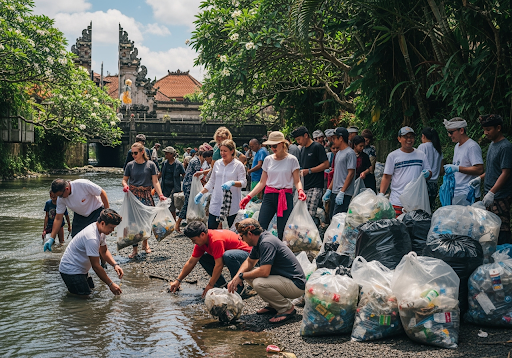
Long-term expats and NGOs have become some of the most visible actors in Bali’s cleanup efforts – groups like Sungai Watch have pulled thousands of pounds of plastic from rivers, and expat-run recycling and education programs operate across the island. But a real, separate ceiling exists on what non-citizens can do: Indonesian visa rules generally prohibit foreign nationals from political activity, including protest. That’s not hypothetical – in past cases, foreign environmental activists attending a climate-related demonstration in Indonesia were deported for violating tourist visa conditions, regardless of the cause. So foreign residents who’ve built their lives on the island, pay into its economy, and watch the same fires burn outside their own homes are, in practice, limited to volunteer and advisory roles. They can clean rivers and fund programs. They generally cannot organize, protest, or push policy the way a citizen could.
The bottom line
Bali’s plastic crisis is real, well documented, and getting worse before it gets better, driven by a landfill system that hit its limits years ago and a policy response that keeps arriving without the infrastructure to back it up. The specific tofu-factory dioxin-egg horror story belongs to East Java, not Bali – but Bali’s own open burning, happening in yards and roadsides across the island every day, carries chemically similar risks that simply haven’t been measured yet. In the meantime, people are getting sick from something most of them have never been told to suspect; government timelines keep slipping, and the people closest to the smoke – Balinese residents and long-term foreign residents alike – are left managing a crisis that outpaced the systems meant to prevent it.